It took the first few chapters for me to connect and understand McEwan’s writing. I’m sure much has already been written about his way of painting articulate details about a person, or the way he takes care to not only describe a place, but to then later on explain why describing that place was important. His writing is fastidiously meta; everything serves a purpose, there is no purposeless prose.
Not ironically, a lack of purposeless prose is exactly how he (unexpectedly, to me) concludes the book: with the uncovered (literally) prose of a character being studied by an academic 100 years into the future, after climate change has made the purposefulness of moving forward even more pertinent.
As evidenced by the bemused students he teaches, the past is something to not be learned from. Being obsessed with the past, our main character experiences a fruitlessness from both his work and his daily life.
I never read Atonement. But I have an understanding that part of what makes McEwan’s writing, paradoxically, ephemerally grounded is the push and pull of his characters’ moral flaws. They’re full bodied, like a wine with many flavors that moves your emotions through a tesseract of wanting. There’s a longing in this book that is akin to the character’s longing: everyone longs for something. Our narrator and protagonist Tom longs to discover a poem that will complete his purpose in life; Vivien longs for a stability that she knows does not exist; her world also longs for stability, knowing that the climate is shifting, but not knowing just how truly unstable it is; the later world longs to move past the instability.
What is the craving of stability and why is it so often out of balance with the lust of each character for what they want that they know that they can’t have, that they pursue anyways for the thrill of it?
But we must come back to the title to summarize what I took away from this book, the most: What We Can Know. This story is really about what we can know in three ways:
What we can learn from the past when studying it through the media and communications that were available in that time. These media and data shape the importance of information.
What we can know about each other when we’re not being empathetic to others needs, or or own, as driven by our lofty goals. Pursuing a dream so fervently that our flaws seep out like oil from the ground.
What we, as readers, can know: the writer ends one story as it is seemingly just beginning, thus ending the book with a complete wrap-up of the life story from the character 100 years earlier.
McEwan lets us only know that we can only truly “know” when the story ends, and thus learning from the past requires endings within the past. The climate changed. Vivien burned the poem. Blundy ended her husband’s story.
The pain of our flaws leads us to act in ways that are detrimental to our future, becoming a beautiful cycle that leads to, in my opinion, my biggest takeaway from the book: that the passion of the teachers alone could not convince the students to care about the past; in fact, the passion is what caused them to double down on their beliefs.
What we can know today is only determined by what the past allows us to know; which despite the many ways we communicate, is still metered by the choices that a person makes to reveal their secrets. In McEwan’s world, free will exists, and it is the reason that anything can ever happen at all, flawed or not.
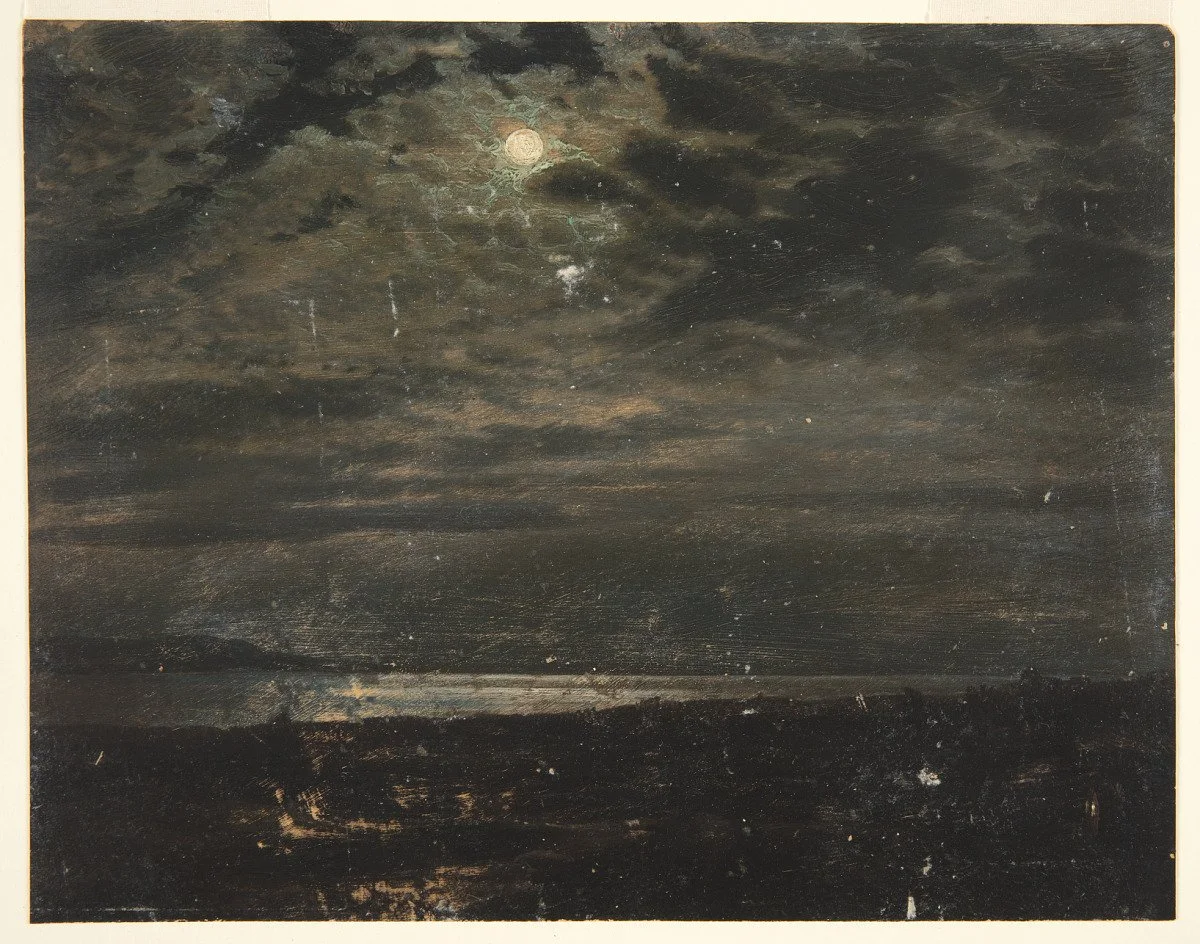
Image: Frederic Edwin Church, American, 1826–1900, Smithsonian